
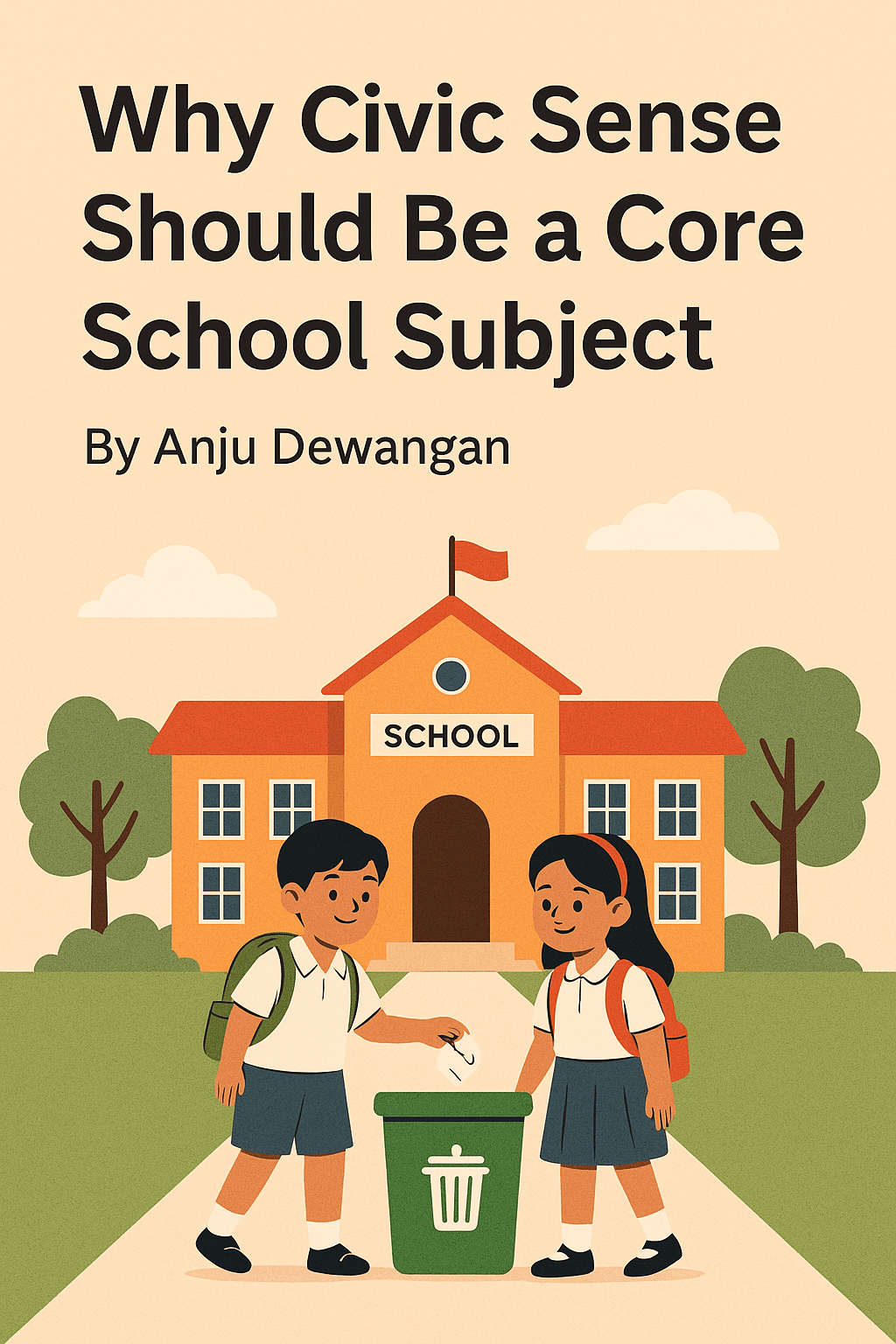
Rethinking Indian Education: Civic Sense as a Core Subject
By Anju Dewangan
Introduction
Picture this: A bustling Indian street with honking cars, littered footpaths, and people ignoring traffic signals. Now imagine the same street — clean, quiet, orderly. The difference? Civic sense.
While India excels in academics, our education system often ignores one crucial subject: how to behave responsibly in society. This blog explores why civic sense should be taught as a core subject, how it can shape a better society, and what an effective civic curriculum could look like.
What’s Missing in Our Current Curriculum
Despite changes in the school syllabus, civic education remains scattered across Social Studies and rarely touches real-life behavior.
The gaps include:
No structured curriculum for civic behavior
Lack of practical application in daily life
No focus on digital citizenship, environmental responsibility, or public etiquette
Overreliance on rote memorization
—
Why Civic Sense Matters
Civic sense isn’t just about good manners—it’s about developing a nation of responsible, aware, and respectful citizens. It teaches:
Respect for others
Awareness of one’s responsibility in public spaces
Cooperation and community values
Hygiene and cleanliness
Digital responsibility
—
Key Topics Every Civic Curriculum Should Include
1. Respect for Others
Teach children to use polite language, show kindness, and listen respectfully.
2. Cleanliness and Hygiene
Instill habits like proper waste disposal and maintaining a clean environment.
3. Public Behavior
Address spitting, littering, noise, standing in queues, and respecting public spaces.
4. Traffic and Safety Rules
Basic road safety, pedestrian etiquette, and following signals.
5. Environmental Responsibility (H
Teach kids to conserve water, reduce plastic, and protect nature.
6. Digital Citizenship
Safe and respectful online behavior, avoiding cyberbullying and fake news.
—
How to Teach Civic Sense in Engaging Ways
Role plays and real-life scenario skits
Storytelling with moral lessons
Drawing & poster-making contests
Debates on social behavior and public issues
Clean-up campaigns and school projects
Gamified quizzes to make learning fun
—
Challenges Faced by Educators
Lack of time in a packed academic schedule
No training for teachers in civic education
Outdated textbooks that don’t reflect today’s challenges
Student disinterest due to no exam focus
No support from parents or communities
—
Overcoming the Challenges
Integrate civic values across all subjects
Train teachers with real-world examples
Update the curriculum with current events and digital behavior
Use project-based learning to make civic sense hands-on
Encourage community partnerships and parental involvement
—
Conclusion
Civic sense is more than good behavior—it’s the foundation of a responsible society. If we want a cleaner, kinder, and more disciplined India, we must teach civic values from the classroom itself.
By embedding civic education into the school system, we raise not just bright students—but great citizens.
—
Download the Full Guide (PDF)
Click here to download the PDF version
https://drive.google.com/file/d/19dteALGm4go_RYf2hasB-GKaq2ApEA2i/view?usp=drivesdk
 Social Media Guide
Leave a comment